Offerings · Strategy · TAM and ICP
The market decision your other go-to-market decisions depend on.
We size your market from the bottom up and agree, out loud, which segments you are walking away from.
The longer version of thatClose
The revenue budget, the roadmap and the territory map all depend on one decision nobody has made: which market you are actually in, and which part of it you have a right to win. Built from real accounts with your leadership team in the room, once, so the other decisions can be made at all.
THE PROBLEM
YOUR BUYERS
86%
of B2B purchases stall during the buying process.
A slice of your ICP maps your capabilities to their problems, with conviction, on their own. You'll run out of them.
FORRESTER, STATE OF BUSINESS BUYING, 2024
What it is
When I laid out the recommended initiatives at the end of a full go-to-market audit, this one went first, and I wrote down why in a line. It is the headpin in a bowling alley. Hit it and the rest of the pins fall. Leave it standing and you can throw everything you have at the others and still be setting them back up next quarter.
What your company ends up with is one segmentation rather than three. Finance sizes the opportunity from it, product builds the roadmap against it, and the field works its territories out of it, and none of the three is a translation of the other two. That is only possible if it is built from real accounts and real filters rather than from a growth rate applied to last year.
TAM and ICP · What it is
The headpin
The market decision
TAM, SAM and SOM built from the bottom up, one model that finance, product and the field all work from, and an ideal customer profile tight enough to disqualify a deal. Made once, with your leadership team in the room.
Finance sizes the opportunity from it
A revenue budget derived as a share of the market you intend to capture rather than as an increment on last year. Quota and selling headcount cascading from it. The pipeline coverage it takes to make that quota, counted rather than assumed. A cost budget related to that revenue budget rather than negotiated against it.
Product builds the roadmap against it
For each SAM segment, a stated problem and the value of solving it, quantified wherever it can be. Then the specific use cases that make up the complete solution, each with its own value proposition and its own claim to being different.
The field works its territories out of it
The SOM focuses field activity, and campaigns and territory assignments get organized around it. And when a seller is on a call and the opportunity is real enough to be tempting, something has to be able to tell him this is not one of ours.
The rest of what it isClose
Watch what happens to your revenue budget without it. In most companies that number comes from inertia: last year plus a percentage, adjusted for the conviction of whoever is talking. Derive it instead from a share of a market you have genuinely sized, and every decision downstream of it is forced into the open, including the ones people were avoiding.
One leadership team, one segmentation, and the same segmentation turning up afterward inside an investor story, inside a product roadmap and inside a territory map.
The headpin itself: TAM, SAM and SOM, built from the bottom up
Bottom up means from accounts, not from an analyst's total. Demarcate the characteristics that define a segment and that exist as real filters in a real data source: revenue, employee count, store count, geography, industry. Filter every account inside your total market, use a proxy you can defend for each one's revenue potential, add growth for a multi-year view, and sum it. That is the TAM, and it is the number investors need.
Then narrow. The SAM is the set of segments your current means give you a right to win in, defined by more granular filters. That narrowing is the workshop half. It runs on tribal knowledge currently distributed across six people's heads, which is why it is built with your team rather than delivered to them, and it is the number that focuses investment.
Then decide what share of each SAM you can actually take in a year, and whether you have the spend and the people to take it. That is the SOM, and it is the number the field works from. It focuses field activity, and campaigns and territory assignments get organized around it. It is also the data your ideal customer profile gets honed from, which is the section after next.
Analyst figures are worth having as a benchmark against your own answer rather than as a substitute for it. In my own note on this method I called the top down version suspect for execution and important for investor validation and credibility, and I would say both halves again. A market figure from IHL, Forrester or Gartner tells you whether your bottom up number is sane. It will not hand your CRO a single account.
TAM and ICP · What it is
Built from the bottom up
TAM, SAM, SOM, and the profile honed from them
One segmentation, not three
- The filters
- The characteristics that define a segment and that exist as real filters in a real data source: revenue, employee count, store count, geography, industry.
- Total Addressable Market (TAM), the number investors need
- Filter every account inside your total market, use a proxy you can defend for each one's revenue potential, add growth for a multi-year view, and sum it.
- Serviceable Addressable Market (SAM), the number that GTM Strategy works from and focuses investment
- The set of segments your current means give you a right to win in, defined by more granular filters. That narrowing is the workshop half, because it runs on tribal knowledge currently distributed across six people's heads.
- Serviceable Opportunity Market (SOM), the number GTM Execution works from
- What share of each SAM you can actually take in a year, and whether you have the spend and the people to take it. It focuses field activity, and campaigns and territory assignments get organized around it.
- Ideal Customer Profile (ICP), the profile, honed from two inputs
- The SOM data you have just built, and your win and loss history along with othe field input, call data and conversation. Together they produce qualification that focuses marketing spend, and robust enough to hold up in front of a seller who wants the deal.
- Attack or leave, every segment
- A written call on each one with the reasoning attached to both sides. A model that tells you where to play and not where to stop has produced a picture rather than a decision.
Why this oneClose
This is the row that turns a model into a decision. Everything above it is analysis that somebody could read, agree with and then file.
What finance can set once this exists
A revenue budget derived as a share of the market you intend to capture rather than as an increment on last year. Quota and selling headcount cascading from it. The pipeline coverage it takes to make that quota, counted rather than assumed. A cost budget related to that revenue budget rather than negotiated against it. Capacity planning across sales, sales engineering, support and implementation, with ramp counted honestly.
When I have assigned ownership of this work, I have assigned it to Finance, with marketing, product, IT and sales leadership participating. Marketing usually builds the slides. Finance has to own the number, because Finance is the function that has to live inside it.
What product can build against once this exists
This is the half that gets left out, and leaving it out is how a roadmap ends up funded against a market nobody ever agreed on. The same segmentation that lets finance set a number lets product invest in offerings aligned to it.
For each SAM segment, a stated problem and the value of solving it, quantified wherever it can be. Then the specific use cases that make up the complete solution, each with its own value proposition and its own claim to being different. Four questions decide each one. Who is going to care enough to write a check, by industry and by title? Why will they care, tied to a number they are personally measured on? Why will they choose your capabilities over a competitor claiming to do a similar thing? Why will they believe you?
Beneath those use cases sit the features engineering builds. Above them sits everything that keeps go-to-market pointed at the right buyer and keeps your operations team from spending next year supporting unprofitable customers who were never aligned to the strategy. It is also why the product wants a reference implementation, tested against the market's use cases rather than against a feature list.
The segments you are not going after
This is the half of segmentation that gets skipped, and skipping it is what makes the whole exercise feel academic six weeks later. A model that tells you where to play and not where to stop has produced a picture rather than a decision. The debate you avoid in the workshop is the debate you then have in pipeline review instead, one deal at a time, with less information and more sunk cost in the room.
So the output carries a written attack or leave call for every segment, with the reasoning attached to both sides. The reasoning for the segments you leave is the part that gets re-litigated later, usually by whoever's plan depended on one of them.
An ideal customer profile tight enough to disqualify a deal
In order to say no to the wrong deals, you need a pipeline of the right ones. That is what the profile is for, and it is why it gets built at the end of this work rather than at the start.
It is honed from two inputs and both of them are yours. The first is the SOM data you have just built from the bottom up: real accounts, real filters, and a defensible view of what you can take. The second is your win and loss history, read for what it says about where you win, where you lose, and where you win and later wish you had not. A profile built from the first alone describes a market. A profile built from the second alone describes your past. Together they produce qualification robust enough to hold up in front of a seller who wants the deal.
Because that is the moment it earns its keep. A seller is on a call, the opportunity is real enough to be tempting, and something has to be able to tell him this is not one of ours. The test is not whether the profile is accurate. Plenty of accurate profiles have never disqualified anything. The test is whether it can say no to a deal somebody wants, in language he can carry into a live conversation.
And the bill for getting it wrong does not land on sales. It lands downstream, on the people who implement, support and renew an unprofitable customer who never fit the strategy.
Which is why I ask your Chief Customer Officer for retention and expansion history by segment before the room narrows anything. A segment that closes well and renews badly looks winnable right up until you fund it.
Built this way the profile does one more thing, and it is the thing that makes the rest of it hold: it aligns strategy and product with the field. The segments finance funded, the segments product is building for and the segments your sellers qualify against are the same segments, described the same way, because they came out of the same model.
- Stage discipline that inspects whether you stayed inside the segments you chose, and the SOM lists themselves turned into shared targeting lists your campaigns and territories run on. Cross-Functionally Aligned GTM Process
- A message written to the segment you chose, in the language its buyers use. Conversational Messaging
- A diagnosis first, if your leadership team does not yet agree on where growth is stuck. GTM Diagnosis and Focus →
Why it matters
What changes
The size of your market stops being a matter of opinion.
The filters are named, the assumptions are visible, and the derivation was debated in the room rather than presented to it, so the number is carried by the people who will be held to it.
Your sellers get a way to say no. A written profile earns its keep in the moment a tempting deal that does not fit is on the phone, so the disqualification happens on the call rather than deep in a pipeline review, and that capacity goes somewhere you can actually win.
The segments you are leaving get decided once, out loud, and on record.
Every segment carries an attack or leave call with the reasoning on both sides, so when somebody reopens one the argument is with the reasoning rather than with whoever's plan depended on it.
Strategy, product and the field stop working from three different documents.
The growth story your board hears, the segments your product team is building for and the accounts your reps are calling become the same decision, with no translation anywhere in between.
Next year's planning starts from a decision instead of from a negotiation.
What your revenue budget, quota, headcount, pipeline coverage and cost budget become under this model is written down, so the cascade is visible before it is funded rather than reconstructed afterward.
Who it is for
What I usually hear before this starts
- We do not know whether our revenue goals line up with the market opportunity, or whether what we are spending will produce predictable, profitable growth.
- Our investor model and our territory map describe two different companies.
- Next year's revenue number is this year's number plus a percentage, and everybody in the room knows it.
- Nobody here can tell me which segments we have decided not to sell to.
- We are staffing and spending against a market we have never actually sized.
This is the problem this offer is bought against. The full page →
How it runs
- Duration
- Two to four weeks.
- Format
- Workshop led, and built with your leadership team rather than for them. The agreement is the deliverable. A model I hand you that your CRO did not help build is a model your CRO will work around.
- Who must be engaged
- The CEO and the CFO, the CRO, and whoever owns marketing and revenue operations. The Chief Product Officer belongs here too, because which segments you can win in is partly a question about what the offering is ready to do, and because product is one of the three functions that has to build against the answer. If the CFO delegates this, you get a model the CFO later disagrees with, and then you have two models again.
- What you supply
- Whatever model you have now, including the one in the board deck. Account data, or access to a provider that holds it. Win and loss history by segment, which is load bearing rather than nice to have, because it is what the ideal customer profile gets honed from. Two or three working sessions of senior time. And a leadership team prepared to say no to a segment out loud, in front of the person who owns it.
- What it is not
- A market research study or an analyst report you commission and receive. I do not sell research. Where third party data is needed we use yours or we buy it, to check the answer rather than to produce it. It is not your product strategy either: what comes out of this is the segment definitions and problem statements your product team then builds that strategy against. Setting your quotas and building your comp plan is not my work, though the segmentation those get built from is.
- If the answer is uncomfortable
- Sometimes the honest output is that you cannot win in the segment your plan depends on. Finding that out in a workshop is inconvenient. Finding it out in the fourth quarter is expensive.
Two reasons this works
Three audiences who never sit in the same meeting, one artifact
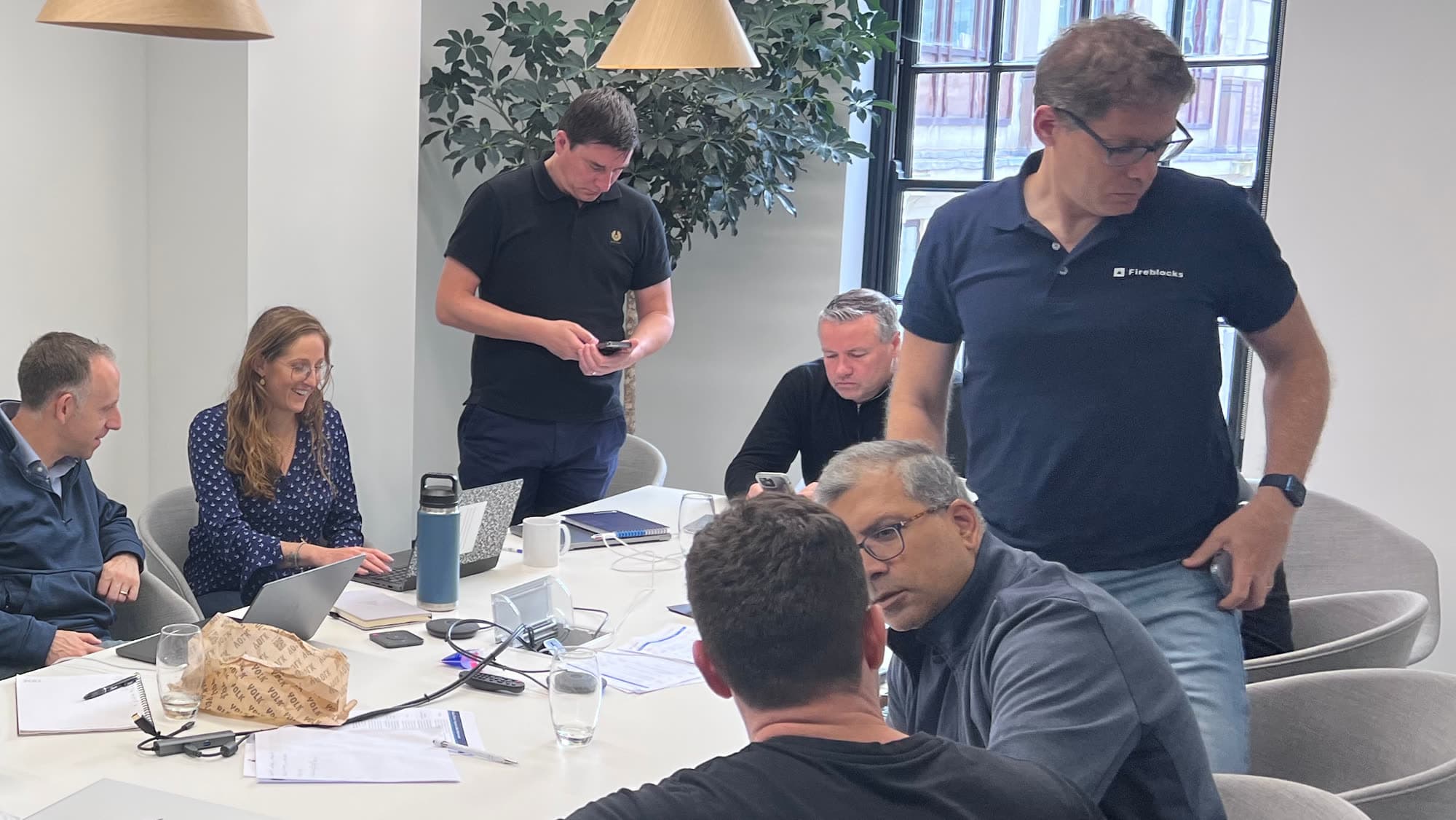
Your CFO wants a defensible total and a share assumption that holds under questioning. Your Chief Product Officer wants to know which segments the roadmap is funded for and what problem to solve inside each. Your sales leader wants named accounts to hand a rep on Monday morning. Most companies produce a document for each, and the gaps between those three documents are where strategy, product and the field quietly stop agreeing about what the year is.
Why that mattersClose
Revenue: growth concentrates where your win rates are structurally highest, because capacity is pointed there on purpose. Cost: lower CAC and shorter payback from selling into segments you have a right to win in. Risk: one growth story you can defend to a board, built from the numbers your field is already working from.
I have carried a number and I have owned the marketing plan, and what that is worth here is knowing which of the three documents gets quietly ignored. It is never the one the CFO wrote.
You have to be able to rebuild it next year without me
A market model is not a document you receive. It is something your organization rebuilds a year from now, when the product has changed and two of the segments have moved.
Why that mattersClose
So the filters are ones that exist in a data source you already pay for, and the assumptions are written where they can be changed rather than buried in a cell. The people who debated the number are the people who can update it, which is the real reason it gets built with your team instead of for them.
Cost: no sizing exercise commissioned again every planning cycle. Risk: no dependency on whoever built the spreadsheet, and that includes me.
What it is like to work with me

“I had the privilege to work with Russell 3 times. After many years of selling and sales leadership where I have been trained at Solution Selling twice, Customer Centric Selling 3 times, Sandler once, Force Management 3 times, I can easily say that Russell is one of the best facilitators of sales training I have met. His ability to lead a room with 2, 3 or 400 people is absolutely incredible. Russell has this gift of feeling the energy of the people he interacts with and can instantly adapt his speech to them; Russell has an extremely strong psychology and can really lead and inspire others through a shared objective. Last point that really inspired me when I was working with him is that Russell enjoyed so much what he does that it is contagious with everyone and make them enjoying learning.”

“Russell, I can’t begin to tell you how much I appreciate your efforts this week! I’ve been through many sales trainings and this was the best I’ve ever attended, much due to you. My team is pumped!”

“Russell, I teared up at the end of your session b/c you reminded me of why I loved sales strategy so much. Thank you for your warmth, the kindness you exuded, and the passion you shared.”

“I was not exaggerating when I told you, and several others, that I have been in many training classes over the years, and this will absolutely stand out as the best one, bar none.”

“Russell’s ability to break down complex concepts into simple, actionable strategies made an immediate impact. Since then, I’ve brought him back multiple times. Russell has a unique talent for making sophisticated sales principles easy to understand and, more importantly, easy to apply in day-to-day selling. Russell immediately elevates any GTM teams efforts.”
Questions people ask
How is this different from the go-to-market audit?
The audit assesses your entire go-to-market against the 6M Go-To-Market Framework, which breaks go-to-market into six parts, and tells you which few things to fix. This is one of those parts, and it is the one the others keep turning out to be blocked behind. So: buy the audit if your leadership team does not agree on the diagnosis. Buy this if you already know focus is the constraint and the debate you keep having is about which segments.
We already have a TAM. It is in the board deck.
Then the useful question is where the number came from. If it was built top down, by taking an analyst's market figure and applying a share assumption to it, it will survive a board meeting and it will not survive contact with a territory map, because there are no accounts underneath it to hand anybody. If it was built bottom up, from accounts and from filters your own team chose, you may already have most of what you need, and I will tell you that rather than sell you a rebuild.
Where does the ideal customer profile actually come from?
From the SOM data and from your win and loss history, in that order. The SOM tells you which accounts are in the market you decided to take a share of. The win and loss record tells you which of those you actually win, which you lose, and which you win and then regret. Honing one against the other is what produces qualification a seller can hold a line with, and it is what gets strategy, product and the field pointed at the same set of accounts.
Could we not do this internally?
Often, yes. What makes it hard internally is never the arithmetic. It is that whoever facilitates has to be able to tell the CRO that the segment he built his plan on is not one you have a right to win in, and still be in the room afterwards. My rule for facilitating anything of this kind is that the facilitator should not have a dog in the race. If you have someone who can do that and has no stake in the answer, use them.
Two to four weeks sounds fast for a market model.
It is fast because the deliverable is agreement, not research. The inputs mostly exist inside your company already, scattered across finance, marketing, product and the field, and the work is getting them into one room and forcing decisions that never got made.
Which market you intend to take a share of is your decision and nobody else's, mine included. What the work does is force that decision in front of the people who have to live inside the answer, and then get the segments you decided against written down with the reasoning attached, because those are the ones that come back. Align, in one number and one definition, and very little downstream of it moves until both exist.

A test you can run this afternoon without me.
Open the market model in your own board deck and try to derive your territory map from it without changing a number. Not a similar map. The one your reps are carrying right now. If you can do it, you do not need this offer. If you cannot, the distance between those two documents is the engagement, and you have just measured it yourself.
Start a conversation